
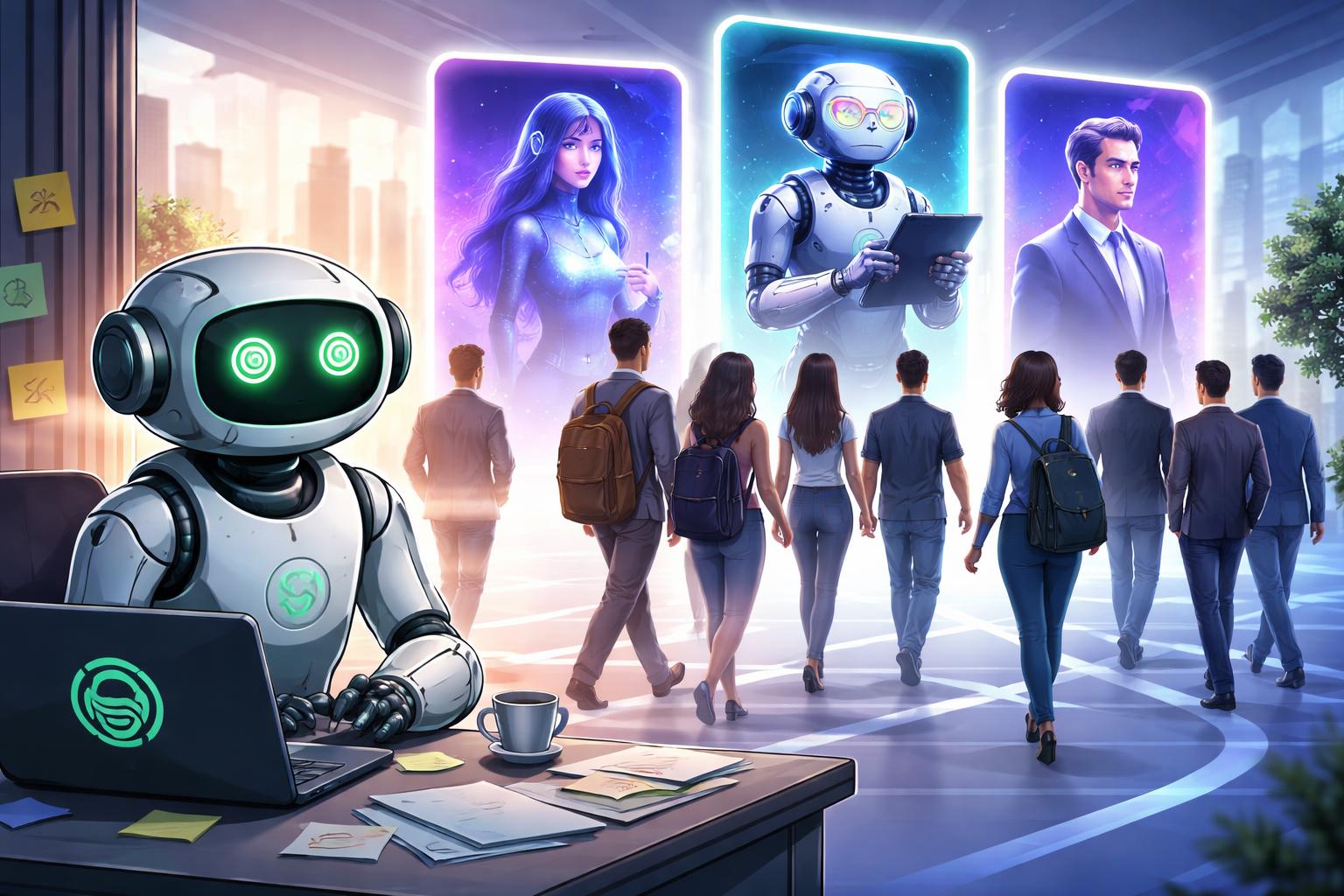
ChatGPT Exodus: The Rise of Better AI Alternatives for Creative Work
Yes, for creative professionals seeking precision, specialized features, and superior output in specific domains, a new generation of AI tools is rapidly emerging as more effective alternatives to generalist platforms like ChatGPT. While ChatGPT remains incredibly versatile and a powerful starting point for many tasks, the “exodus” refers to creatives migrating towards purpose-built AI solutions that are proving more adept at handling the nuances and complexities of writing, design, video, and other creative endeavors.
The landscape of artificial intelligence has evolved dramatically since the initial public excitement around large language models (LLMs) like ChatGPT. What began as a marvel of text generation and understanding has paved the way for highly specialized AI applications tailored to distinct creative workflows. These niche tools, often powered by their own fine-tuned models or integrated with advanced functionalities, are designed from the ground up to address the unique challenges and demands of creative industries, offering capabilities that generalist AIs simply can’t match in terms of quality, efficiency, and specific feature sets.
The Shift from Generalist to Specialist AI in Creative Fields
For a long time, ChatGPT was the go-to AI for anyone looking to automate or augment creative tasks. Its ability to generate text, brainstorm ideas, and even draft simple code made it an invaluable general-purpose assistant. However, as AI technology matures, the limitations of a “one-size-fits-all” approach become apparent, especially when precision, artistic flair, or highly specialized technical knowledge are required.
Creative professionals often face unique demands: a writer needs not just coherent text, but compelling narratives tailored to a specific brand voice; a designer requires visuals that convey emotion and adhere to complex aesthetic principles; a video editor needs tools that smoothly integrate into their post-production workflow. These are areas where specialized AI tools shine, offering features, templates, and controls that are simply unavailable or less refined in broader AI models. The focus has shifted from simply generating content to generating *high-quality, contextually relevant, and creatively nuanced* content efficiently.
Specialized AI Tools Revolutionizing Creative Workflows
Let’s explore into some key creative domains and the specialized AI tools that are making a significant impact.
AI for Writing and Content Creation
While ChatGPT can draft emails and articles, dedicated AI writing assistants offer advanced features like brand voice calibration, SEO optimization, and integration with content management systems.
- Jasper: Renowned for its ability to generate long-form content, marketing copy, and blog posts, Jasper allows users to define brand voice and tone, ensuring consistent output. It excels in creating content across various formats, from social media captions to comprehensive articles, making it a favorite for content marketers and agencies. If you’re looking to scale your content production while maintaining quality and brand consistency, Jasper offers robust solutions.
- Copy.ai: This tool focuses on generating high-converting marketing copy. With templates for everything from sales emails to product descriptions, Copy.ai helps businesses quickly produce persuasive text that resonates with their target audience. Its intuitive interface and diverse range of copy types make it a valuable asset for busy marketing teams. For rapid generation of effective marketing copy, Copy.ai is an excellent choice.
- Surfer SEO: While not a direct content generator in the same vein as Jasper or Copy.ai, Surfer SEO is an indispensable AI-powered tool for content creators. It analyzes top-ranking content for a given keyword and provides data-driven recommendations for optimal word count, keywords to include, heading structure, and more. When paired with a writing AI, Surfer SEO ensures the generated content is not just well-written but also highly optimized for search engines, significantly boosting its visibility. To ensure your content ranks high, integrating Surfer SEO into your workflow is highly recommended.
These tools, unlike generalist LLMs, are designed with the specific goal of producing publish-ready content that aligns with professional standards and SEO best practices. For enterprises looking to streamline their content operations, there are even more powerful solutions available. You can explore the Best AI Writing Assistants for Enterprise Teams for a deeper dive into tools that can handle large-scale content demands.
AI for Graphic Design and Image Generation
Creating visually stunning and unique images requires more than just describing a scene. Specialized AI image generators offer unparalleled control, artistic styles, and ethical considerations.
- Midjourney: Known for its artistic prowess and ability to generate incredibly detailed and aesthetically rich images from text prompts, Midjourney is a favorite among artists and designers. It excels in creating conceptual art, realistic photography, and imaginative illustrations with a distinct visual signature. Its community and continuous model improvements make it a leading choice for high-quality visual content.
- DALL-E 3 (integrated with ChatGPT Plus/Pro and available through API): While integrated with a generalist platform, DALL-E 3 itself is a highly specialized image generation model. It stands out for its superior understanding of complex prompts and ability to generate images that closely match textual descriptions, including text within images. It offers a balance between artistic quality and prompt adherence, making it versatile for various design needs.
- Adobe Firefly: Integrated within the Adobe Creative Cloud ecosystem, Firefly is designed for professional use, offering generative fill, text-to-image, and text effects while emphasizing ethical data sourcing and commercial viability. Its strength lies in its seamless integration with existing design workflows and tools like Photoshop and Illustrator, providing creatives with powerful AI-driven assistance directly within their familiar environments. For professionals already using Adobe products, Firefly adds a robust AI layer to their creative process.
AI for Video and Audio Production
Video and audio editing are traditionally time-consuming. AI is now transforming these fields, automating mundane tasks and enabling entirely new creative possibilities.
- Descript: A true powerful tool, Descript allows users to edit video and audio by editing the text transcript. It automatically removes filler words, identifies speakers, and even offers AI-powered voice cloning and overdubbing. For podcasters, YouTubers, and content creators, Descript dramatically speeds up the editing process, making professional-quality audio and video accessible to more people. To compare options in this space, you can also look into other platforms in our Descript vs. Riverside review.
- Synthesia: This platform specializes in creating AI-generated videos with lifelike avatars and natural-sounding voices. Users can type a script, choose an avatar, and Synthesia will generate a professional video, complete with gestures and facial expressions. It’s ideal for corporate training, marketing videos, and explainer content where consistency and scalability are key. For high-quality AI avatar videos, Synthesia offers advanced capabilities.
- Pictory: Pictory focuses on rapidly creating short, shareable video content from long-form text or existing videos. It can automatically extract key moments, add captions, and select relevant stock footage, making it perfect for repurposing blog posts, webinars, or podcasts into engaging social media videos. If you need to transform text or long videos into engaging short-form content quickly, Pictory is an efficient solution.
AI for Presentation and Data Visualization
Crafting compelling presentations often involves more than just content; it requires visual appeal and clear communication. AI tools are simplifying this process.
- Beautiful.ai: This AI-powered presentation maker uses design rules to ensure every slide you create looks professional and consistent. Instead of starting from scratch, you input your content, and the AI automatically applies smart layouts and visuals, adapting as you add or remove elements. It takes the guesswork out of design, allowing you to focus purely on your message. For effortlessly beautiful presentations, Beautiful.ai is an excellent platform.
- Gamma: Gamma offers an alternative approach to presentations, focusing on dynamic, interactive decks and web pages rather than traditional static slides. Its AI-powered designer helps you create visually rich content with minimal effort, transforming outlines into polished presentations, documents, or web pages with a sleek, modern aesthetic.
AI for Code Generation and Development
Even in the highly technical field of software development, AI is playing a crucial role, assisting with code generation, debugging, and project management.
- GitHub Copilot: Trained on billions of lines of code, GitHub Copilot acts as an AI pair programmer, suggesting code snippets, entire functions, and even tests in real-time as you type. It supports various programming languages and integrates directly into popular IDEs, significantly accelerating development workflows and reducing the effort required for boilerplate code. For developers looking to boost their coding efficiency, GitHub Copilot is an indispensable tool.
- Tabnine: Similar to Copilot, Tabnine is an AI code completion tool that learns from your code and provides context-aware suggestions. It’s designed to personalize suggestions based on your codebase and coding style, making it highly effective for individual developers and teams.
Key Differences: Generalist AI vs. Specialized AI for Creatives
Here’s a quick overview of why specialized tools often lead the pack for creative tasks:
| Feature/Aspect | Generalist AI (e.g., ChatGPT) | Specialized AI (e.g., Jasper, Midjourney, Descript) |
|---|---|---|
| Focus & Scope | Broad, multi-purpose, text-centric. Handles a wide range of tasks superficially. | Narrow, domain-specific, tailored to a single creative discipline (writing, design, video, etc.). Deep functionality. |
| Output Quality & Precision | Good for initial drafts, brainstorming, general ideas. May lack nuance, specific style, or professional polish. | Excellent, highly refined, professional-grade output. Deep control over style, tone, aesthetics, and technical parameters. |
| Feature Set | Basic text generation, summarization, Q&A, simple coding. Limited specialized controls. | Advanced, industry-specific features: brand voice calibration, SEO optimization, generative fill, visual editing, transcript-based editing, avatar generation, intelligent layouts. |
| Workflow Integration | Often standalone or requires manual copy-pasting. | Built to integrate smoothly into existing professional creative software (e.g., Adobe Creative Suite, IDEs) or offer end-to-end solutions for a specific creative task. |
| Ethical & Legal Considerations | Data sources can be broad and sometimes unclear. Potential for copyright issues with image/code generation. | Often prioritize commercially safe, ethically sourced data (e.g., Adobe Firefly). Offer more transparency and control over output rights. |
| Ease of Use for Specific Tasks | Easy for simple prompts, but requires extensive prompting for specific creative outputs. | Intuitive interfaces and templates designed for specific creative tasks, reducing the learning curve for professional results. |
Choosing the Right AI Tool for Your Creative Needs
The “exodus” from generalist AI doesn’t mean abandoning it entirely, but rather strategically integrating specialized tools into your workflow. When considering a new AI tool, ask yourself:
- What specific creative problem am I trying to solve? (e.g., generating social media visuals, writing blog posts, editing podcasts)
- How important is output quality and precision for this task? (e.g., rough draft vs. publish-ready content)
- Does the tool integrate with my existing software or workflow?
- What level of control and customization do I need?
- Are there ethical considerations (e.g., data sourcing, commercial rights) that are critical for my work?
By answering these questions, you can identify tools that not only save time but also elevate the quality of your creative output, positioning you at the forefront of AI-assisted creativity.
The Future of Creative AI
The trend towards specialized AI is only set to accelerate. We’ll likely see even more finely tuned models addressing hyper-specific creative niches, offering unprecedented levels of automation, personalization, and artistic control. The convergence of these specialized tools, perhaps orchestrated by advanced AI agents or custom no-code platforms, promises a future where creatives can achieve more with greater efficiency and less friction. This evolution is not about replacing human creativity but augmenting it, allowing artists, writers, designers, and developers to focus on higher-level conceptualization and unique human insights, while AI handles the heavy lifting of execution and iteration.
FAQ
Q1: Is ChatGPT no longer useful for creative work?
A1: ChatGPT remains a valuable tool for brainstorming, generating initial drafts, summarizing information, and exploring ideas. However, for specialized tasks requiring high precision, specific artistic styles, or deep integration into professional workflows, dedicated AI tools often provide superior results and more tailored features.
Q2: What is the main advantage of specialized AI tools over generalist ones for creatives?
A2: The main advantage is depth over breadth. Specialized AI tools are trained on vast datasets specific to their domain and are designed with features that cater to the nuances of that creative field. This results in higher quality output, more precise control, and better integration with professional workflows, ultimately saving time and enhancing the final product.
Q3: Are these specialized AI tools difficult to learn?
A3: Many specialized AI tools are designed with user-friendliness in mind, often featuring intuitive interfaces, templates, and guided workflows to help creatives achieve professional results without needing extensive technical knowledge. While some may have a learning curve for advanced features, the initial barrier to entry is often lower than mastering complex traditional software.
Q4: How do I ensure the content generated by AI is original and safe to use?
A4: For text, always review and edit AI-generated content to ensure it aligns with your brand voice and is factually accurate. For images, look for tools that emphasize ethical data sourcing, like Adobe Firefly, or those that allow you to refine and customize outputs significantly. Always check the terms of service and licensing for any AI tool you use, especially for commercial projects, and consider combining AI output with human creativity to ensure uniqueness.
Conclusion
The journey from general-purpose AI to highly specialized solutions marks a pivotal moment for creative professionals. The “ChatGPT exodus” isn’t a rejection of AI, but an embrace of its refined, more powerful forms. By integrating these purpose-built tools into their workflows, creatives can unlock unprecedented levels of efficiency, elevate the quality of their output, and spend more time on the truly human aspects of imagination and strategy. The future of creativity is not just AI-powered; it’s AI-specialized, enabling us to push the boundaries of what’s possible.